

Optical Communications
Environmental Problem
The electricity consumption of communication networks exceeds 300 TWh/year, roughly equivalent to Italy’s total electricity use.
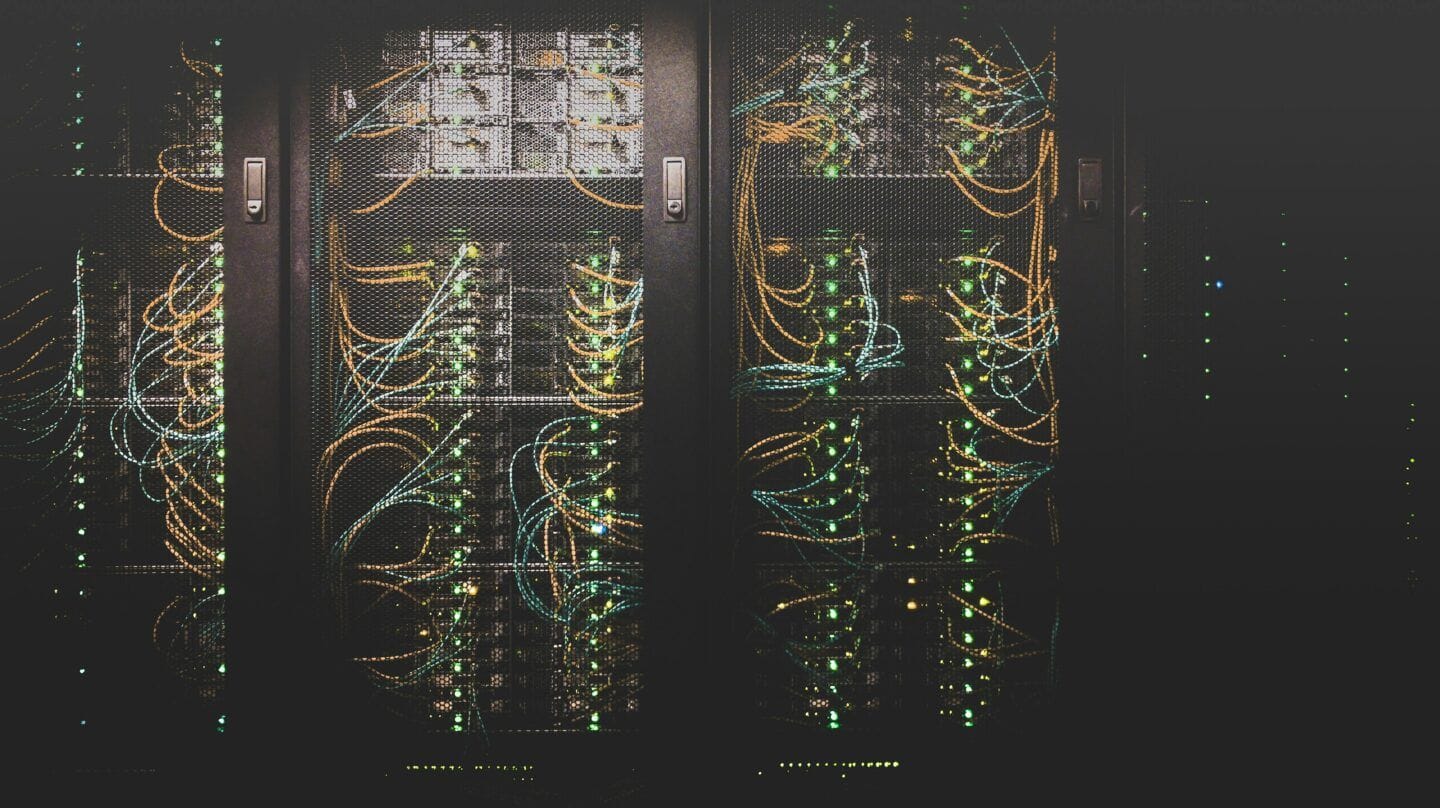
We live in a world increasingly defined by digital data. From video streaming and teleconferencing to financial transactions and cloud-based applications, both the modern economy and our daily lives rely on a constant flow of information. This dependence is intensifying as growing video demand and quality, along with emerging technologies such as artificial intelligence, virtual reality, and the Internet of Things, generate unprecedented volumes of data every second. Most of this data is stored in data centers, often located far from the users who utilise it. As such, delivering data requires complex infrastructures made up of both fixed and wireless networks. This invisible movement of bytes requires very tangible amounts of energy. Over the past decade, the electricity consumption of global data transmission networks has grown steadily at around 5% annually, approximately twice the pace of broader electricity consumption, now exceeding 300 TWh per year—roughly equivalent to the electricity consumption of an entire country like Italy.
Despite the steady rise in electricity use, such growth remains modest compared to the surge in internet traffic, which has expanded at a CAGR of about 25%. The latter asymmetric growth has been driven by major efficiency gains in transmission, most notably by the transition from copper cables to fiber optic in fixed networks.
Environmental Solutions
Fiber optic is over 40% more energy-efficient than copper in data transmission.

Fixed communication networks rely on two main media: copper and fiber optic. Copper, the historic foundation of telecom connectivity, still in use today, carries data as electrical signals. Fiber optic, instead, uses pulses of light through hair-thin glass strands, offering a fundamentally more advanced way to transmit information. As digital traffic grows, operators must deliver massive volumes of data while managing energy use. In this context, fiber optic is almost always superior, as it delivers far greater bandwidth, across longer distances, with less supporting equipment, consequently simplifying the network and reducing infrastructure needs.
Equally important, fiber optic is significantly more energy-efficient: transmitting the same data requires only a fraction of the electricity of copper, reducing telecom energy demand by 40% to 80% depending on context according to sources. For these reasons, the two sectors that require transferring the most of data, telecom and data centers, are rapidly phasing out copper in favor of fiber optic, recognizing its critical role in handling rising traffic while lowering both energy, installation and operating costs.
Telecom
Data transmission lies at the heart of the telecommunications industry. Telecom infrastructure is built around long-haul networks, both terrestrial and subsea, where fiber optics remain the only viable technology for high-capacity connectivity. These networks are complemented by “last-mile” connections that link the backbone infrastructure to end users. In the last mile, three main architectures exist, defined by how copper and fiber optic are combined:
- Copper broadband – legacy systems where the entire connection runs on copper. Still common, but increasingly outdated.
- Fiber to the cabinet (FTTC) – fiber optic extends to a local street cabinet, while the final stretch into homes and offices remains copper.
- Fiber to the home (FTTH) – the most advanced model, with fiber optic reaching directly the end user
FTTH enables the fastest internet speeds while also being the most energy-efficient and future-proof option. Over the past years, significant public and private investments have accelerated fiber optic rollout, with many operators and governments prioritizing wider coverage. Across the European Union, the average household fiber optic coverage has reached nearly 70%.
Data Centers
The second major shift from copper to fiber optics is taking place within data centers. As the backbone of the digital economy, data centers power cloud computing, video streaming, e-commerce, and the rapidly expanding field of artificial intelligence—all of which demand vast computing resources and high-speed data exchange. As workloads intensify, the need for greater bandwidth and more energy-efficient connectivity continues to grow.
Traditionally, copper has been dominant in providing short-range links inside data centers. A first transition is already underway: fiber optic is becoming the standard for connections between racks, while inside racks copper remains prevalent. Copper is still attractive for intra-rack links because it allows simple cheaper connections, but its lower bandwidth and interference issues (crosstalk) are clear limits. Fiber optic solves these constraints, making it the preferred solution where both speed and efficiency are critical.
The transition to fiber optic, however, is more complex in the data center sector compared to the telecoms sector. Data centers are characterised by a large number of relatively short links. Every link requires two optical transceivers, and dozens of transceivers are required in every rack. Transceivers, which convert electrical signals to optical signals and vice versa, represent a major cost factor when deployed across the thousands of links in a large data center. As a result, most operators adopt a hybrid approach, mixing copper and fiber depending on performance, length of the link, and cost requirements.
A second shift is also in motion: the transition from traditional pluggable transceivers to co-packaged optics (CPO). In a CPO configuration, the optical engine is integrated directly into the same package as the switch chip, removing the need for separate transceivers (and so their cost) and minimizing the distance data has to travel in copper cables. This design cuts power consumption, reduces latency (delays in data transmission), and supports the bandwidth demands of next-generation data center applications.
Although CPO technology remains in early development, major technology firms are investing heavily in prototypes and pilots, so the trend is unmistakable: data centers are moving not only from copper to fiber optic, but also toward new optical architectures that will redefine connectivity at the core of the digital economy.
All these technological trends are shifting competitive advantages, long-term opportunities and returns on invested capital of players in the value chain.
Investment opportunities
The ongoing transition from copper to fiber continues to offer several investment opportunities across the telecom and data center segments.
The inevitable transition from copper to fiber opens a number of opportunities across segments.
Terrestrial Telecom is dominated by local players that have already started to consolidate and showing modest growth. Within this space, private equity and private credit investors can find value in the fiber-to-the-home (FTTH) rollout ecosystem. The most attractive opportunities lie with a concentrated group of operators and installation firms in countries lagging in deployment, such as Germany and Belgium. In addition, certain component suppliers stand to benefit from reshoring trends, as governments increasingly classify telecom infrastructure as strategic and encourage a shift away from Chinese to Western vendors.
Data centers represent the most dynamic growth opportunity. Expansion is being driven primarily by very large, listed players in the US and Taiwan. Public equity markets offer the clearest path to capture this growth, especially through companies enabling the transition from copper to fiber and the adoption of co-packaged optics (CPO). Key beneficiaries include leading technology suppliers such as TSMC, NVIDIA, and Broadcom.
As data volumes continue to surge, telecom networks and data centers are being forced to transition from copper wiring to fiber optics. While fiber deployment is mature in many regions and applications, compelling profitability remains in niche areas: particularly FTTH lagging markets, component producers benefiting from reshoring trends, and listed companies specialising in co-packaged optics. This variety allows investors to select opportunities ranging from stable, infrastructure-like returns in deployment and services to higher-growth, technology-focused exposure in optical components, aligning with different risk/return objectives.